|
High Wood
Ladies and gentlemen, this is High Wood,
Called by the French, Bois des Fourneaux,
The famous spot which in Nineteen-Sixteen,
July, August and September was the scene
Of long and bitterly contested strife,
By reason of its High commanding site.
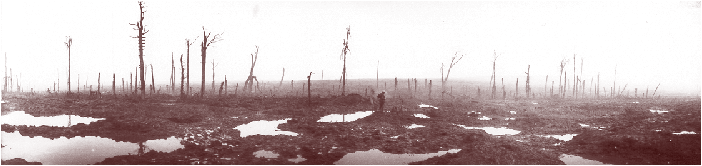
Observe the effect of shell-fire in the trees
Standing and fallen; here is wire; this trench
For months inhabited, twelve times changed hands;
(They soon fall in), used later as a grave.
It has been said on good authority
That in the fighting for this patch of wood
Were killed somewhere above eight thousand men,
Of whom the greater part were buried here,
This mound on which you stand being...
Madame, please,
You are requested kindly not to touch
Or take away the Company's property
As souvenirs; you'll find we have on sale
A large variety, all guaranteed.
As I was saying, all is as it was,
This is an unknown British officer,
The tunic having lately rotted off.
Please follow me - this way...
the path, sir, please,
The ground which was secured at great expense
The Company keeps absolutely untouched,
And in that dug-out (genuine) we provide
Refreshments at a reasonable rate.
You are requested not to leave about
Paper, or ginger-beer bottles, or orange-peel,
There are waste-paper baskets at the gate.
Philip Johnstone 1918
|
Philip
Johnstone 1895-1968
Lieutenant
John Purvis, under the pseudonym of Philip Johnstone, wrote this poem
in February
1918, 8 months before the Armistice. Remarkably he
foresees tourists visiting the killing fields after the conflict's end.
High Wood, referred to in this bizarre poem, was fought over during the
Battle of the Somme and finally captured by the British in September
1916 after 3 months of heavy fighting. In fact, Purvis' inspired
prediction became reality sooner than he might have envisaged: soon
after the war, High Wood
became one of the first places to be visited by tourists. This macabre
place has never been totally cleared of bodies and the debris of
war. Estimates suggest that the ground contains the remains of some
8,000 British and German soldiers who were killed in action
here. Even
today, parts of the wood still conceal live ammunition and it is unsafe
to stray from the paths.
and the debris of
war. Estimates suggest that the ground contains the remains of some
8,000 British and German soldiers who were killed in action
here. Even
today, parts of the wood still conceal live ammunition and it is unsafe
to stray from the paths.
How shall we feel at High Wood? Certainly more
respectful than the seemingly indifferent visitors in Purvis' prophetic poem
|

 In
Flanders Fields, probably the best-known poem of the First World War,
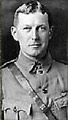
was written in 1915 during the second Battle of Ypres. John McRae was a Canadian doctor who was appointed
surgeon with the First Canadian Brigade. The death
of one of his closest friends the day before caused him to write this
timeless poem, which reflected his growing disillusion with the war and
its unimaginable human cost. It is in part due to this poem that the poppy
was adopted as the Flower of Remembrance. John Mcrae fell ill during the
summer of 1917, and died of pneumonia and meningitis in January
1918
In
Flanders Fields, probably the best-known poem of the First World War,
was written in 1915 during the second Battle of Ypres. John McRae was a Canadian doctor who was appointed
surgeon with the First Canadian Brigade. The death
of one of his closest friends the day before caused him to write this
timeless poem, which reflected his growing disillusion with the war and
its unimaginable human cost. It is in part due to this poem that the poppy
was adopted as the Flower of Remembrance. John Mcrae fell ill during the
summer of 1917, and died of pneumonia and meningitis in January
1918
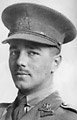 France December 1916. Nothing fully prepared him for the
shock and suffering of front line experience. Within twelve days of
arriving in France the easy-going chatter of his letters home turned to
a cry of anguish. Most of his poetry was written while recovering in
hospital from shell shock. Owen returned to the front in September 1918,
won the Military Cross for gallantry in October, and was killed leading
his men on 4 November, one week before the Armistice, at the age of 25
France December 1916. Nothing fully prepared him for the
shock and suffering of front line experience. Within twelve days of
arriving in France the easy-going chatter of his letters home turned to
a cry of anguish. Most of his poetry was written while recovering in
hospital from shell shock. Owen returned to the front in September 1918,
won the Military Cross for gallantry in October, and was killed leading
his men on 4 November, one week before the Armistice, at the age of 25