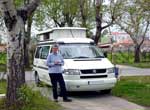
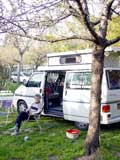
Winter is
passing, and our decision for Spring 2007 has settled on Sicily as
a venue. We plan to set off this year in early March, which brings its own
additional challenges: finding campsites open for the drive across
France and Italy,
and the uncertainty
of weather conditions in crossing the Alps by our
favoured route through the Fréjus Tunnel. Ferry crossings to Sicily are another bewildering experience
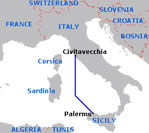
with a choice of routes from Italy: Genoa, Civitavecchia or Naples,
depending on how far you want to face the hazards of Italian autostrade.
The ferries are expensive, but you can reduce costs by driving the
length of Italy for the 3 mile crossing from the 'toe' to Messina. We
have split the difference and opted for the Civitavecchia route; as
always, we suggest
www.viamare.com for details of Mediterranean ferry routes. So why Sicily? the answer is that this fascinating island contains more
history,
geography, flora and cultural
diversity than you could
hope to absorb in even a 12 month stay. Despite the costs of getting to Sicily, there is simply
so much to learn. Don't just
take our word; visit the
Best
of Sicily web site for a wealth of valuable background information on
the island.
As always with the Prologues to our ventures,
a snap-shot profile of Sicilian geography, history, economy, politics and culture is
given below as a prelude to the trip.
Geography of Sicily: the
medieval Arabs thought Sicily
was
paradise on earth, describing it poetically as
Clothed by the peacock from its many-coloured mantle of feathers.
The island certainly displays a wonderful diversity of scenery, ranging
from idyllic beaches
to
darkly forested hills, barren and craggy
mountain slopes, and ancient river valleys swathed in springtime flora. Its
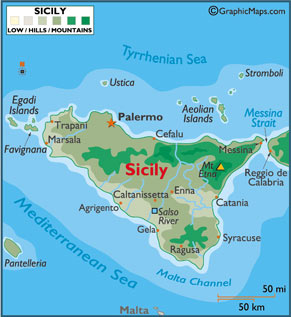
triangular shape gave Sicily its ancient name of Trinacria. The largest
of the Mediterranean islands, Sicily straddles the continental shelves
between North Africa and Europe. This precarious geographical position
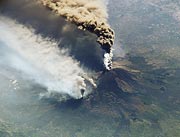
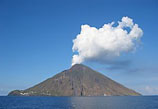
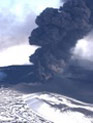
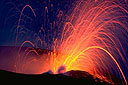
has given the island a unique topography, with snow-covered Etna,
Europe's largest active volcano at almost 11,000 feet in height, and
regularly erupting Stromboli, one of the volcanic Aeolian Islands off
the north coast. Click
here for a 'virtual climb' on the active volcanic peak of Stromboli. This web site gives a graphic impression of what we
hope to experience on Stromboli.
Sicily
is prone to major seismic instability with
cities destroyed by massive earthquakes as recently as 1908. In addition
to spectacular natural features, 3,000 years of tumultuous history has
endowed Sicily with a wealth of architectural and artistic treasures
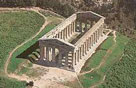
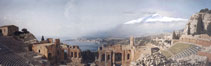
unparalleled in Europe. These range from wonderfully preserved archaeological sites
dating from Classical Greek colonies, through to remains from Roman,
Arab, Norman and Spanish occupation, as well as spectacular Baroque
architecture dating from urban renewal after 17th century destruction by
earthquake.
Sicilian History:
with its strategic position commanding the central Mediterranean, Sicily
has throughout history been fought over, colonised and occupied by
leading powers. Its history is one of successive waves of foreign
domination, each leaving their cultural and architectural imprint on the
island, leading ultimately to unification with Italy in mid-19th
century.
The
earliest traces of human settlement in Sicily date from the
Palaeolithic/Neolithic eras (20,000~2,000 BC). Archaeological evidence
suggests that Bronze Age inhabitants traded with the Mycenaeans of
mainland Greece. From around 1,250 BC, further population movements from
mainland Europe and North Africa settled in Sicily. The 5th century BC
historian Thucydides (Book VI-2) describes a native people originally
from Spain
known
as Sicanians who were pushed into the south and west of the island by
newcomers from Italy, the Sicels from whom the name Sicily is derived. A
further group, the Elymians, alleged to be refugees from the fall of
Troy, founded settlements in the east of the island. The 8th century BC
saw the expansion of colonisation in the western Mediterranean: the
Phoenician trading city of Carthage in modern Tunisia founded colonies
in the east of Sicily; the cities of Greece, driven by growing
population pressures and trade expansion, established a succession of
colonies along the eastern and southern Sicilian seaboard: Naxos, Megara
Hyblaea, Syracuse, Catania, Messina, Catania, Selinus (modern Selinunte),
Akragas (Agrigento)and Gela. As the Greek colonies grew rich and
expanded, conflict with Carthage was inevitable. Led by powerful tyrants
such as Gelon of Gela, the Greeks defeated the
Carthaginians
in 480 BC at the battle of Himera to control Sicily. The island's
plentiful resources assured the Greek colonies of lucrative trade:
colossal building programmes were a testament to the cities' opulence
and sophistication. But bitter rivalries, disaffected native population,
and parochial politics constantly undermined civic achievements,
resulting in endless inter-state conflict and internal civil strife as
political factions pitted tyrants against oligarchic democrats. A
turning point for Sicily came with the Peloponnesian war between Athens
and Sparta in the late 5th century BC: the increasing wealth and power
of Syracuse caused Athens in 415 BC to send the Great Expedition against
the Sicilian city, the largest military armada ever assembled. Thucydides gives a
harrowing account of the expedition's total defeat, and of the Athenian
survivors enslaved in Syracusan stone quarries. It would be the end
of Athens' days of empire and of Greece's golden Classical Age.
Syracuse's domination of Sicily enabled the defeat of the resurgent
Carthaginians, but a new power was emerging in the Mediterranean - Rome.
Rome's
conflict with and ultimate defeat of Carthage (whose general,
Hannibal had crossed the Alps with his elephants to ravage Italy) brought
Roman conquest of Sicily in 212 BC. Under Roman rule for the next 700
years, Sicily became an agricultural backwater supplying corn to Rome
from vast estates cultivated by slaves. With the 5th century AD
barbarian invasions, Rome's western empire disintegrated: Goths and
Vandals passed through Sicily, but as there was nothing left to pillage,
soon moved on. For the next 300 years, the eastern Byzantine Empire
ruled Sicily, but their days were numbered. By 800 AD, Saracen Arabs
controlled the western Mediterranean, and under Muslim rule, Sicily
enjoyed a renaissance in trade, the arts and agriculture with the
introduction of silk, citrus fruit and date farming. Over the next 200
years, the new capital Palermo became a great cosmopolitan city, a
marketplace for produce and centre of learning and the arts.
Ever the
target of marauders, Sicily was conquered by the rapacious
Normans in the late 11th century. The island was ruled by Roger
I and his Norman and Angevin successors for the next 200 years, leaving an impressive architectural inheritance.
French brutality and greed fermented Sicilian revolt: in 1282, an alleged assault by soldiers as the Palermo church bells rang
for the evening service of Vespers provoked slaughter of the hated
French and county-wide rebellion, the so-called Sicilian Vespers. The
Aragonese Spanish intervened and ruled Sicily for the next 500 years.
The absentee Spanish king governed Sicily indifferently through
Viceroys, and the island reverted to a feudal regime where all real
power rested in the hands of a greedy nobility. The Sicilian peasantry
suffered greatly and the decimating impact of the Black Death in 1347~8
along with periods of starvation reduced them to desperate poverty.
Thanks to Spanish misrule and intolerance, the cultural renewal of the
Renaissance passed Sicily by, reinforcing the effects of poverty and
ignorance. The aristocracy now had the island in its pocket, aided by
the corrupt Catholic Church which enforced its power through the
Inquisition.
The 17th
century marked the nadir of Sicilian history: poverty, disease and
ignorance were compounded by natural disasters. In 1669 Catania was
destroyed by the biggest eruption in Etna's history, and in 1693 a
massive earthquake devastated the cities of south-eastern Sicily,
killing over 50,000 people. The cities were rebuilt in the lavish
Baroque style of the period. Apart from a brief period in the Napoleonic
Wars when Nelson patrolled the island given its strategic position, the
Bourbon Spanish continued their inept rule, uniting Sicily with Naples
as the Kingdom of the Two Sicilies. But the writing was on the wall:
continuous revolts against the Bourbons led ultimately their expulsion
in 1860 by Garibaldi and his Thousand who landed in Sicily as a
prelude
to Italian unification under the Piedmontese King Vittorio Emanuele. In
spite of initial support for unification, the Sicilians soon began to
question whether anything had been gained. The Italian
government's failure to solve the 'southern problem', together with lack
of investment and ineffectual handling of demands for land reform led to
increasing resentment; peasant and workers' uprisings were ruthlessly
crushed by Government forces and gangs employed by the landowners to
maintain their control. By the end of the 19th century, the overwhelming
despair of the peasantry resulted in mass emigration and depopulation of
rural areas; a quarter of the population, including the most intelligent
and enterprising, left to make a new life in USA. The WW1 dealt a savage
blow to Sicily's ailing economy, and was followed in 1922 by the rise of
Mussolini and the Fascists who made brutal attempts to crush Mafia
lawlessness; the result was to drive the movement further underground.
In WW2, Sicily was the first European territory to be invaded by the
Allies, when in July 1943 the Americans under Patton and British under
Montgomery landed at Gela in Operation Husky. Sicilian cities suffered
badly from bombardment and fighting to liberate the island. Ironically,
the Allies relied on collaboration with Mafiosi dons to recapture the
island; the Mafia's control of the island's economy was re-established,
and Cosa Nostra has continued since to exercise power within Sicilian
society.
Post-war Politics and The Mafia: in
the aftermath of WW2, Sicily was in a state of turmoil. The Mafia was
enlisted by the ruling authorities to help suppress the spread of
Communism, and in response to demands for Sicilian separatism, the first
Regional Parliament was established in 1947. During the 1950s, the
ruling Christian Democrats, in league with the Mafia and landowners,
gained a secure hold on regional politics. Despite grindingly slow
government bureaucracy and Mafia opposition, some agricultural reform
was achieved (50% of land had been held by 1% of the population) and
investment finally gave the beginnings of an
industrial base, but at a disastrous environmental cost. With unemployment
however at 30%, many Sicilians sought work as migrants in Italy or
Germany.
Traditionally the Mafia had operated mainly in the countryside: absentee
landlords employed bailiffs and gangs of enforcers (mafiosi) to collect
extortionate rents from peasant labourers and to deal with 'problems'
for anyone who paid well. Sicilian society kept quiet about the shadowy
organisation out
of fear or complicity, the so called omertà or code of silence.
Post WW2, the Mafia began its expansion into the cities: it took over
the lucrative construction industry and laundered funds from networks of
protection rackets and kickbacks into its bank accounts. During the
1960s and 70s, in conjunction with US Mafia, the Sicilian Mafia moved
into
narcotics dealing earning billions of dollars; greed between the rival
families resulted in vicious feuds and murders. In the
1980s, the first serious attempts to investigate the Mafia, and
the hold that organised crime exercised over Sicilian politics and
economy, led to murderous retaliations against prosecutors,
police-chiefs and judges, culminating in 1982 with the murder of Police
Prefect General Dalla Chiesa and in 1992 the car-bomb murders
of the 2 leading prosecutors, Giovanni Falcone and Paolo Borsellino. Major breakthroughs in the fight against the Mafia came in the 1990s:
the first was the capture of Salvatore 'Toto' Riina, the Mafia 'Boss of
Bosses'; despite being the most wanted man in Europe, political
collusion had had allowed him to live openly in his home village of
Corleone for 20 years. Further arrests and convictions of leading Mafia
bosses continue, but the Mafia's invisible influence of today still
permeates Sicilian society: it is estimated that 80% of Palermo's
shopkeepers pay some kind of protection money; Mafia profits from
international drug trafficking and other rackets is believed to be €123
billion, 10% of national GDP. Arrests of leading Mafia figures revealed
incriminating evidence to implicate Italian political leaders in Mafia
corruption: Giulio Andreotti, 7 times Prime Minister, went on trial but
was acquitted due to the comic-opera nature of the Italian judicial system.
Following enquiries into his business dealings, the current Prime
Minister, Silvio Berlusconi, secured immunity from prosecution for
Mafia money laundering only while he remains in office.
Continuing
anti-Mafia campaigns have caused the Mafia to maintain a lower profile
after all the headlines of the 1990s, but its activities and corruption
continue as an insidious feature of Sicilian society at all levels. The
costs of organised crime are a major debilitating factor in the Italian
economy. But the revelations of high-profile trials of Mafia bosses and
political figures has perhaps brought changing public attitude, more
likely to reduce the Mafia's hold on Sicilian life. There is even an
Anti-Mafia museum now in Corleone, once a Mafia stronghold, to educate
both Sicilians and overseas visitors. Even so, remarks by the
interior-minister in Berlusconi's new government perhaps signify the
Mafia's endemic presence: "We have got to learn to live with this
reality". This most enduring of criminal organizations is the
predominantly challenging social problem confronting
Sicilian society today. Click here
for more information on the
Sicilian Mafia.
So there we have it. Hopefully this
Prologue will have served to explain the fascination of Sicily, and our
reasons for choosing the island for our Spring 2007 venture. Our plans
are reaching fruition, ferry tickets are booked, preparations
almost complete, and we set off at the beginning of March. Again we
shall be covering entirely new ground with so much of interest to
explore and to learn about. During the trip, we shall continue our
practice of updating the web site weekly or so, reporting on our
explorations with news and photos. We hope you will enjoy sharing our
venture.
Sheila
and Paul
Published: Thursday 15 February 2007
 Sicilian Geography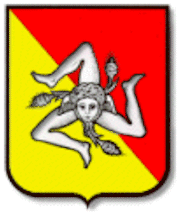
 to
darkly forested hills, barren and craggy
mountain slopes, and ancient river valleys swathed in springtime flora. Its
triangular shape gave Sicily its ancient name of Trinacria. The largest
of the Mediterranean islands, Sicily straddles the continental shelves
between North Africa and Europe. This precarious geographical position
has given the island a unique topography, with snow-covered Etna,
Europe's largest active volcano at almost 11,000 feet in height, and
regularly erupting Stromboli, one of the volcanic Aeolian Islands off
the north coast. Click
here for a 'virtual climb' on the active volcanic peak of Stromboli. This web site gives a graphic impression of what we
hope to experience on Stromboli.
Sicily
is prone to major seismic instability with
cities destroyed by massive earthquakes as recently as 1908. In addition
to spectacular natural features, 3,000 years of tumultuous history has
endowed Sicily with a wealth of architectural and artistic treasures
to
darkly forested hills, barren and craggy
mountain slopes, and ancient river valleys swathed in springtime flora. Its
triangular shape gave Sicily its ancient name of Trinacria. The largest
of the Mediterranean islands, Sicily straddles the continental shelves
between North Africa and Europe. This precarious geographical position
has given the island a unique topography, with snow-covered Etna,
Europe's largest active volcano at almost 11,000 feet in height, and
regularly erupting Stromboli, one of the volcanic Aeolian Islands off
the north coast. Click
here for a 'virtual climb' on the active volcanic peak of Stromboli. This web site gives a graphic impression of what we
hope to experience on Stromboli.
Sicily
is prone to major seismic instability with
cities destroyed by massive earthquakes as recently as 1908. In addition
to spectacular natural features, 3,000 years of tumultuous history has
endowed Sicily with a wealth of architectural and artistic treasures
 unparalleled in Europe. These range from wonderfully preserved archaeological sites
dating from Classical Greek colonies, through to remains from Roman,
Arab, Norman and Spanish occupation, as well as spectacular Baroque
architecture dating from urban renewal after 17th century destruction by
earthquake.
unparalleled in Europe. These range from wonderfully preserved archaeological sites
dating from Classical Greek colonies, through to remains from Roman,
Arab, Norman and Spanish occupation, as well as spectacular Baroque
architecture dating from urban renewal after 17th century destruction by
earthquake.
 PROLOGUE to our Spring 2007 trip to Sicily:
 Winter is
passing, and our decision for Spring 2007 has settled on Sicily as
a venue. We plan to set off this year in early March, which brings its own
additional challenges: finding campsites open for the drive across
France and Italy,
and the uncertainty
of weather conditions in crossing the Alps by our
favoured route through the Fréjus Tunnel. Ferry crossings to Sicily are another bewildering experience
with a choice of routes from Italy: Genoa, Civitavecchia or Naples,
depending on how far you want to face the hazards of Italian autostrade.
The ferries are expensive, but you can reduce costs by driving the
length of Italy for the 3 mile crossing from the 'toe' to Messina. We
have split the difference and opted for the Civitavecchia route; as
always, we suggest
Winter is
passing, and our decision for Spring 2007 has settled on Sicily as
a venue. We plan to set off this year in early March, which brings its own
additional challenges: finding campsites open for the drive across
France and Italy,
and the uncertainty
of weather conditions in crossing the Alps by our
favoured route through the Fréjus Tunnel. Ferry crossings to Sicily are another bewildering experience
with a choice of routes from Italy: Genoa, Civitavecchia or Naples,
depending on how far you want to face the hazards of Italian autostrade.
The ferries are expensive, but you can reduce costs by driving the
length of Italy for the 3 mile crossing from the 'toe' to Messina. We
have split the difference and opted for the Civitavecchia route; as
always, we suggest  Despite the costs of getting to Sicily, there is simply
so much to learn. Don't just
Despite the costs of getting to Sicily, there is simply
so much to learn. Don't just
 take our word; visit the
 known
as Sicanians who were pushed into the south and west of the island by
newcomers from Italy, the Sicels from whom the name Sicily is derived. A
further group, the Elymians, alleged to be refugees from the fall of
Troy, founded settlements in the east of the island. The 8th century BC
saw the expansion of colonisation in the western Mediterranean: the
Phoenician trading city of Carthage in modern Tunisia founded colonies
in the east of Sicily; the cities of Greece, driven by growing
population pressures and trade expansion, established a succession of
colonies along the eastern and southern Sicilian seaboard: Naxos, Megara
Hyblaea, Syracuse, Catania, Messina, Catania, Selinus (modern Selinunte),
Akragas (Agrigento)and Gela. As the Greek colonies grew rich and
expanded, conflict with Carthage was inevitable. Led by powerful tyrants
such as Gelon of Gela, the Greeks defeated the
known
as Sicanians who were pushed into the south and west of the island by
newcomers from Italy, the Sicels from whom the name Sicily is derived. A
further group, the Elymians, alleged to be refugees from the fall of
Troy, founded settlements in the east of the island. The 8th century BC
saw the expansion of colonisation in the western Mediterranean: the
Phoenician trading city of Carthage in modern Tunisia founded colonies
in the east of Sicily; the cities of Greece, driven by growing
population pressures and trade expansion, established a succession of
colonies along the eastern and southern Sicilian seaboard: Naxos, Megara
Hyblaea, Syracuse, Catania, Messina, Catania, Selinus (modern Selinunte),
Akragas (Agrigento)and Gela. As the Greek colonies grew rich and
expanded, conflict with Carthage was inevitable. Led by powerful tyrants
such as Gelon of Gela, the Greeks defeated the
 Carthaginians
in 480 BC at the battle of Himera to control Sicily. The island's
plentiful resources assured the Greek colonies of lucrative trade:
colossal building programmes were a testament to the cities' opulence
and sophistication. But bitter rivalries, disaffected native population,
and parochial politics constantly undermined civic achievements,
resulting in endless inter-state conflict and internal civil strife as
political factions pitted tyrants against oligarchic democrats. A
turning point for Sicily came with the Peloponnesian war between Athens
and Sparta in the late 5th century BC: the increasing wealth and power
of Syracuse caused Athens in 415 BC to send the Great Expedition against
the Sicilian city, the largest military armada ever assembled. Thucydides gives a
harrowing account of the expedition's total defeat, and of the Athenian
survivors enslaved in Syracusan stone quarries. It would be the end
of Athens' days of empire and of Greece's golden Classical Age.
Syracuse's domination of Sicily enabled the defeat of the resurgent
Carthaginians, but a new power was emerging in the Mediterranean - Rome.
Carthaginians
in 480 BC at the battle of Himera to control Sicily. The island's
plentiful resources assured the Greek colonies of lucrative trade:
colossal building programmes were a testament to the cities' opulence
and sophistication. But bitter rivalries, disaffected native population,
and parochial politics constantly undermined civic achievements,
resulting in endless inter-state conflict and internal civil strife as
political factions pitted tyrants against oligarchic democrats. A
turning point for Sicily came with the Peloponnesian war between Athens
and Sparta in the late 5th century BC: the increasing wealth and power
of Syracuse caused Athens in 415 BC to send the Great Expedition against
the Sicilian city, the largest military armada ever assembled. Thucydides gives a
harrowing account of the expedition's total defeat, and of the Athenian
survivors enslaved in Syracusan stone quarries. It would be the end
of Athens' days of empire and of Greece's golden Classical Age.
Syracuse's domination of Sicily enabled the defeat of the resurgent
Carthaginians, but a new power was emerging in the Mediterranean - Rome.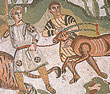 Rome's
conflict with and ultimate defeat of Carthage (whose general,
Hannibal had crossed the Alps with his elephants to ravage Italy) brought
Roman conquest of Sicily in 212 BC. Under Roman rule for the next 700
years, Sicily became an agricultural backwater supplying corn to Rome
from vast estates cultivated by slaves. With the 5th century AD
barbarian invasions, Rome's western empire disintegrated: Goths and
Vandals passed through Sicily, but as there was nothing left to pillage,
soon moved on. For the next 300 years, the eastern Byzantine Empire
ruled Sicily, but their days were numbered. By 800 AD, Saracen Arabs
controlled the western Mediterranean, and under Muslim rule, Sicily
enjoyed a renaissance in trade, the arts and agriculture with the
introduction of silk, citrus fruit and date farming. Over the next 200
years, the new capital Palermo became a great cosmopolitan city, a
marketplace for produce and centre of learning and the arts.
Rome's
conflict with and ultimate defeat of Carthage (whose general,
Hannibal had crossed the Alps with his elephants to ravage Italy) brought
Roman conquest of Sicily in 212 BC. Under Roman rule for the next 700
years, Sicily became an agricultural backwater supplying corn to Rome
from vast estates cultivated by slaves. With the 5th century AD
barbarian invasions, Rome's western empire disintegrated: Goths and
Vandals passed through Sicily, but as there was nothing left to pillage,
soon moved on. For the next 300 years, the eastern Byzantine Empire
ruled Sicily, but their days were numbered. By 800 AD, Saracen Arabs
controlled the western Mediterranean, and under Muslim rule, Sicily
enjoyed a renaissance in trade, the arts and agriculture with the
introduction of silk, citrus fruit and date farming. Over the next 200
years, the new capital Palermo became a great cosmopolitan city, a
marketplace for produce and centre of learning and the arts.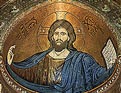 Ever the
target of marauders, Sicily was conquered by the rapacious
Normans in the late 11th century. The island was ruled by Roger
I and his Norman and Angevin successors for the next 200 years, leaving an impressive architectural inheritance.
French brutality and greed fermented Sicilian revolt: in 1282, an alleged assault by soldiers as the Palermo church bells rang
for the evening service of Vespers provoked slaughter of the hated
French and county-wide rebellion, the so-called Sicilian Vespers. The
Aragonese Spanish intervened and ruled Sicily for the next 500 years.
The absentee Spanish king governed Sicily indifferently through
Viceroys, and the island reverted to a feudal regime where all real
power rested in the hands of a greedy nobility. The Sicilian peasantry
suffered greatly and the decimating impact of the Black Death in 1347~8
along with periods of starvation reduced them to desperate poverty.
Thanks to Spanish misrule and intolerance, the cultural renewal of the
Renaissance passed Sicily by, reinforcing the effects of poverty and
ignorance. The aristocracy now had the island in its pocket, aided by
the corrupt Catholic Church which enforced its power through the
Inquisition.
Ever the
target of marauders, Sicily was conquered by the rapacious
Normans in the late 11th century. The island was ruled by Roger
I and his Norman and Angevin successors for the next 200 years, leaving an impressive architectural inheritance.
French brutality and greed fermented Sicilian revolt: in 1282, an alleged assault by soldiers as the Palermo church bells rang
for the evening service of Vespers provoked slaughter of the hated
French and county-wide rebellion, the so-called Sicilian Vespers. The
Aragonese Spanish intervened and ruled Sicily for the next 500 years.
The absentee Spanish king governed Sicily indifferently through
Viceroys, and the island reverted to a feudal regime where all real
power rested in the hands of a greedy nobility. The Sicilian peasantry
suffered greatly and the decimating impact of the Black Death in 1347~8
along with periods of starvation reduced them to desperate poverty.
Thanks to Spanish misrule and intolerance, the cultural renewal of the
Renaissance passed Sicily by, reinforcing the effects of poverty and
ignorance. The aristocracy now had the island in its pocket, aided by
the corrupt Catholic Church which enforced its power through the
Inquisition.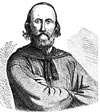 prelude
to Italian unification under the Piedmontese King Vittorio Emanuele. In
spite of initial support for unification, the Sicilians soon began to
question whether anything had been gained. The Italian
government's failure to solve the 'southern problem', together with lack
of investment and ineffectual handling of demands for land reform led to
increasing resentment; peasant and workers' uprisings were ruthlessly
crushed by Government forces and gangs employed by the landowners to
maintain their control. By the end of the 19th century, the overwhelming
despair of the peasantry resulted in mass emigration and depopulation of
rural areas; a quarter of the population, including the most intelligent
and enterprising, left to make a new life in USA. The WW1 dealt a savage
blow to Sicily's ailing economy, and was followed in 1922 by the rise of
Mussolini and the Fascists who made brutal attempts to crush Mafia
lawlessness; the result was to drive the movement further underground.
In WW2, Sicily was the first European territory to be invaded by the
Allies, when in July 1943 the Americans under Patton and British under
Montgomery landed at Gela in Operation Husky. Sicilian cities suffered
badly from bombardment and fighting to liberate the island. Ironically,
the Allies relied on collaboration with Mafiosi dons to recapture the
island; the Mafia's control of the island's economy was re-established,
and Cosa Nostra has continued since to exercise power within Sicilian
society.
prelude
to Italian unification under the Piedmontese King Vittorio Emanuele. In
spite of initial support for unification, the Sicilians soon began to
question whether anything had been gained. The Italian
government's failure to solve the 'southern problem', together with lack
of investment and ineffectual handling of demands for land reform led to
increasing resentment; peasant and workers' uprisings were ruthlessly
crushed by Government forces and gangs employed by the landowners to
maintain their control. By the end of the 19th century, the overwhelming
despair of the peasantry resulted in mass emigration and depopulation of
rural areas; a quarter of the population, including the most intelligent
and enterprising, left to make a new life in USA. The WW1 dealt a savage
blow to Sicily's ailing economy, and was followed in 1922 by the rise of
Mussolini and the Fascists who made brutal attempts to crush Mafia
lawlessness; the result was to drive the movement further underground.
In WW2, Sicily was the first European territory to be invaded by the
Allies, when in July 1943 the Americans under Patton and British under
Montgomery landed at Gela in Operation Husky. Sicilian cities suffered
badly from bombardment and fighting to liberate the island. Ironically,
the Allies relied on collaboration with Mafiosi dons to recapture the
island; the Mafia's control of the island's economy was re-established,
and Cosa Nostra has continued since to exercise power within Sicilian
society.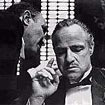 Traditionally the Mafia had operated mainly in the countryside: absentee
landlords employed bailiffs and gangs of enforcers (mafiosi) to collect
extortionate rents from peasant labourers and to deal with 'problems'
for anyone who paid well. Sicilian society kept quiet about the shadowy
organisation out
of fear or complicity, the so called omertà or code of silence.
Post WW2, the Mafia began its expansion into the cities: it took over
the lucrative construction industry and laundered funds from networks of
protection rackets and kickbacks into its bank accounts. During the
1960s and 70s, in conjunction with US Mafia, the Sicilian Mafia moved
into
narcotics dealing earning billions of dollars; greed between the rival
families resulted in vicious feuds and murders. In the
1980s, the first serious attempts to investigate the Mafia, and
the hold that organised crime exercised over Sicilian politics and
economy, led to murderous retaliations against prosecutors,
police-chiefs and judges, culminating in 1982 with the murder of Police
Prefect General Dalla Chiesa and in 1992 the car-bomb murders
of the 2 leading prosecutors, Giovanni Falcone and Paolo Borsellino. Major breakthroughs in the fight against the Mafia came in the 1990s:
the first was the capture of Salvatore 'Toto' Riina, the Mafia 'Boss of
Bosses'; despite being the most wanted man in Europe, political
collusion had had allowed him to live openly in his home village of
Corleone for 20 years. Further arrests and convictions of leading Mafia
bosses continue, but the Mafia's invisible influence of today still
permeates Sicilian society: it is estimated that 80% of Palermo's
shopkeepers pay some kind of protection money; Mafia profits from
international drug trafficking and other rackets is believed to be €123
billion, 10% of national GDP. Arrests of leading Mafia figures revealed
incriminating evidence to implicate Italian political leaders in Mafia
corruption: Giulio Andreotti, 7 times Prime Minister, went on trial but
was acquitted due to the comic-opera nature of the Italian judicial system.
Following enquiries into his business dealings, the current Prime
Minister, Silvio Berlusconi, secured immunity from prosecution for
Mafia money laundering only while he remains in office.
Traditionally the Mafia had operated mainly in the countryside: absentee
landlords employed bailiffs and gangs of enforcers (mafiosi) to collect
extortionate rents from peasant labourers and to deal with 'problems'
for anyone who paid well. Sicilian society kept quiet about the shadowy
organisation out
of fear or complicity, the so called omertà or code of silence.
Post WW2, the Mafia began its expansion into the cities: it took over
the lucrative construction industry and laundered funds from networks of
protection rackets and kickbacks into its bank accounts. During the
1960s and 70s, in conjunction with US Mafia, the Sicilian Mafia moved
into
narcotics dealing earning billions of dollars; greed between the rival
families resulted in vicious feuds and murders. In the
1980s, the first serious attempts to investigate the Mafia, and
the hold that organised crime exercised over Sicilian politics and
economy, led to murderous retaliations against prosecutors,
police-chiefs and judges, culminating in 1982 with the murder of Police
Prefect General Dalla Chiesa and in 1992 the car-bomb murders
of the 2 leading prosecutors, Giovanni Falcone and Paolo Borsellino. Major breakthroughs in the fight against the Mafia came in the 1990s:
the first was the capture of Salvatore 'Toto' Riina, the Mafia 'Boss of
Bosses'; despite being the most wanted man in Europe, political
collusion had had allowed him to live openly in his home village of
Corleone for 20 years. Further arrests and convictions of leading Mafia
bosses continue, but the Mafia's invisible influence of today still
permeates Sicilian society: it is estimated that 80% of Palermo's
shopkeepers pay some kind of protection money; Mafia profits from
international drug trafficking and other rackets is believed to be €123
billion, 10% of national GDP. Arrests of leading Mafia figures revealed
incriminating evidence to implicate Italian political leaders in Mafia
corruption: Giulio Andreotti, 7 times Prime Minister, went on trial but
was acquitted due to the comic-opera nature of the Italian judicial system.
Following enquiries into his business dealings, the current Prime
Minister, Silvio Berlusconi, secured immunity from prosecution for
Mafia money laundering only while he remains in office.