WEEKS
1~2 NEWS - the Somme battlefields and Vimy Ridge:
After the
heat-wave of early summer, we left UK in chilly, overcast and blustery
conditions. The local Calais newspaper, La Voix du Nord, reported on
recent floods: un mois de pluie en 24 heures - un mètre d'eau après de
violentes pluies. Normally our trips begin with a 5 day drive across the
Continent, but this time we started serious exploration from the
2nd morning with visits to the Hundred Year War battlefields of Crécy
(1346) and Agincourt (1415) (Photo 1).
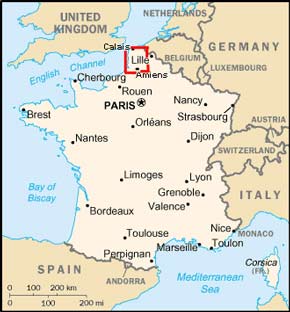
Click on highlighted area
for details of the
Somme and Vimy Ridge
Our base was the delightfully welcoming and straightforward Camping St
Lardre in the Hamlet of St Georges near Hesdin. We stood at Agincourt
field, where Henry V had roused his exhausted and outnumbered troops
with his Shakespearean harangue 'Once more
unto the breach". The massed English long-bow archers wrought havoc
among the heavily armoured French knights bogged down in the mud, just
as German machine guns did on the Somme 500 years later.
Our next
stop was the Bird Sanctuary of Marquenterre set amongst the dunes and
meres of the Somme Estuary. On 1 afternoon, we saw shelduck, mallard,
pochard, tufted ducks and moorhens, Canada and grey-lag geese, coots,
crane, egrets, avocets, lapwings, dunlins, cormorants, godwits, white
storks, spoonbills and night herons. It was a satisfying afternoon's
bird-watching, but the French shooting season had started; we hoped the
birdlife would keep a low profile!
Moving
inland, we camped at Picquigny for the 20 minute rail journey into
Amiens. Municipal and privately-owned campsites are increasingly hyping
their earnings by renting out year-round space for static caravans,
leaving few pitches for visitors; it's an annoying trend, makings stays
noisy and overcrowded. Amiens, setting of Sebastian Faulks' novel
Birdsong, was once the centre of a thriving textile industry. The
city is dominated by the magnificent Gothic Cathedral; built in just 50
years from 1220, it is one of the largest Gothic structures in France
with a remarkable uniformity of style, and a particularly impressive
west façade (Photo 2).
We travelled across the
rolling chalk downlands of the Somme towards the town of Albert, the
same route the Tommies must have marched up to the Front in 1916. After
the first months of 1914, the WW1 Western Front became a static
line of opposing trenches stretching 750 kms from the Belgian coast to
the Swiss border south of Alsace. The Germans occupied highly fortified
defensive positions along the ridges above the valleys of the Somme and Ancre, employing all the infernal paraphernalia of modern
mechanical warfare. For the next 3 years, the Allies made repeated and
costly offensive assaults in futile attempts to break the German line.
Whereas the Germans had dug in, determined to defend territories already
overrun, in contrast the Allied trenches were regarded
as temporary
positions from which to launch offensives to drive back the invaders.
Added to this, the British high-command anachronistically clung to the
military mind-set of
the mid-19th century, seeing the only solution to
any problem both tactical or strategic as hurling massed infantry
against the barbed wire, machine guns and artillery of the German
defences. The town of Albert lay 6 kms back from the front line and was
utterly destroyed by artillery shelling during WW1 (see left). From
across the open Somme landscape, the most prominent feature was the
gilded statue of the Virgin atop the town's Basilica. The statue was hit
by shell-fire in 1915, and the 'Leaning Virgin' prompted the
superstition among the troops that when it finally fell, the war would
end. In the 1920s reconstruction of war damaged towns and villages, the Basilica was rebuilt and the
Golden Virgin again stands out as a landmark over the town (see right).
The very worthwhile Musée des Abris in Albert gives a gruesomely
realistic impression of the appalling conditions which men had to
survive in the trenches.
In 1916, the British and
French launched the Somme offensive to relieve pressure on the French
army defending Verdun further south. This windy open terrain had no
intrinsic strategic value; it was simply where the 2 sides stood locked
in static trench warfare. For 8 days, British artillery pounded the
German defences, but the Germans took shelter, well-protected in
their dug-outs. At 7-30 am on 1 July, the Tommies went over the top and
advanced across the still intact barbed wire of No Man's Land, up the ridges
into the murderous machine gun fire: on this 1st day, the British
suffered 60,000 casualties with 20,000 killed. It was the costliest
defeat ever suffered, and the futile slaughter went on until November
with scarcely any ground gained. Simply throw more infantry at the
problem was the only answer the British generals knew.
In this area of the Somme,
there are endless war cemeteries, all beautifully maintained by the
Commonwealth War Graves Commission (CWGC). If you want to locate a
relative killed in war, visit the CWGC web
site on www.cwgc.org We knew of a Great Uncle killed on the Somme in 1916, and from the CWGC
web site, located the cemetery where he was buried. 'Battlefield
tourism' has become big business in this the 90th Anniversary year of
the Somme Battle; we were glad to have personal reasons for being here.
Paul was very fond of his Great Aunt Lucy; she never talked of her
husband who was killed in action on 18 July 1916 on the
Somme, leaving his widow to bring up their baby son, Reginald. Our
researches showed that her husband had been Private William Arthur
Marriott of the 1st Battalion Northamptonshire Regiment who was buried
in the CWGC Cemetery at Contalmaison near
Albert. We found his grave
which stands alongside several of his fellow Northants, all killed on
the
same day trying to take the village. To pay our respects, but unable to
restrain our tears, we planted a rose at his grave (Photo 3), and
recorded an entry in the cemetery visitor book: 'To Private Marriott, 90
years after your death, on behalf of your late wife (my Aunt Lucy), and
of Reginald, the son you never saw'. Our week on the Somme had been
plagued with the same constant rain which in 1916 turned the trenches
and battlefield into a sea of mud. Even so, we have visited so many
cemeteries and memorials, and tearfully walked along row after neat row
of white headstones, most bearing
a
regimental badge and a man's name and rank: myriads of young men who died
to protect our freedom, far from families in Britain, France, and
Commonwealth countries - Australia, New Zealand, Canada and
Newfoundland. And saddest of all were those graves simply marked ' A
soldier of the Great War, known unto God'
During our time in the
Somme, we stayed at a small campsite in Authuille, a village which would
have been right on the front lines in 1916, and like so many in the
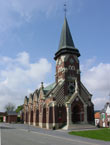
region, was totally devastated by shelling. All of the village churches
date from the 1920s post-war reconstruction period (see left). It is
simply unimaginable to consider the fate of villagers in these farming
communities; French civilian casualties in WW1 are estimated at 250,000.
One of our most poignant
visits was to the Newfoundlanders Memorial Park at Beaumont Hamel. The
area has been preserved in its post-battle state to show the topography
of the 1916 battlefield, with
opposing lines of trenches separated by 250 yards of No Man's Land,
still pock-marked with shell holes (Photo 4). On 1 July 1916 at
the start of the Somme offensive, 820 volunteers from the British colony
of Newfoundland went over the top from the British front line trenches,
silhouetted against the skyline, into the murderous hail of machine gun
fire. They made it only 50 yards as far as a surviving tree, and in
half-hour, only 68 of the 820 remained alive. 90 years later, we
followed in their footsteps, climbing out of the British trenches and
walking across No Man's Land as far as the German frontline. Nothing
more unpleasant than driving rain marred our progress, the same rain
which in 1916 had turned this ground into a morass of blood-soaked mud,
and which today further enhanced our empathy with the young men whose
lives were so carelessly sacrificed by incompetent leadership.
Later that day, we visited
the monumental Memorial to the British Missing, designed by Edwin
Lutyens and built in 1932 on the Thiepval Ridge, where so many died. It
commemorates the 73,000 British dead whose bodies have never been found
(Photo 5). You truly do need to walk the ground, up that slope
towards the Thiepval Ridge, to have some understanding of the terror in
the hearts of those poor young men as they clawed their way over the
barbed wire into the sweeping machine gun fire. Further south were the memorials and cemetery at High
Wood, the scene of Johnstone's inspired prediction of battlefield
tourism in his poem High Wood (click
here to read) This ridge-line was bitterly fought over with
many 1000s of lives lost, some of whom are buried in the cemetery at
High Wood (Photo 6). Nearby in Mametz Wood, we found the
memorial to Lance Corporal Harry Fellows who survived until 1987 (Photo
7). His poem Mametz Wood 1914 and 1984 recalls the fighting
in Mametz Wood, destructive of human life and the beauty of nature:
Shattered trees and
tortured earth
The acrid stench of decay
Of mangled bodies lying around
The battle not far away
This man-made devastation
Does man have no regrets
Does he pause to ask the question
Will the birds ever sing again in Mametz?
And the final 2 lines
capture so poignantly the unimaginable contrast between the hellish
destruction of 1916 and the peacefulness of the woods today:
Where once there was war
Now peace reigns supreme
And the birds sing again in Mametz
These final 2 lines are
recorded on his memorial. Second to our visit to Great Uncle William's
grave, this was the most moving moment of our time on the Somme, able to
focus our pent-up emotions on the fate on this one man, commemorated
here in the peace of Mametz Wood where, thank God, the birds do now sing
again. And along the roadside, the poppies still bloom.
Our final visit was to the
Canadian Memorial Park at Vimy Ridge, scene of some of the most ghastly
trench warfare of WW1: almost 2 years of battle, culminating in the
successful but costly re-capture of the high ground
in April 1917 by Canadian troops. Again the terrain has been preserved
exactly as it was after the conflict, the ground pock-marked with shell
holes, and huge mine craters, and lines of trenches snaking across the
grass. The ground is still littered with the debris of war - unexploded
munitions - and red signs warn of the dangers of straying from the
paths. Canadian students conduct visitors through tunnels cut in the
chalk through which men and materials were ferried up to the front line
to launch the assault. Nearby we were able to experience the feeling of
walking through the preserved trenches (Photo 8), with the
opposing German trenches just yards away across No Man's Land which was
cratered by mine explosions: kitschy yes, but rather better than 9 April
1917!
Bemused by the countless
numbers of cemeteries and graves we had visited over the week, we took
our leave to continue our travels south. So what feeling does all this
leave us with? Of course overwhelming sorrow, and perhaps some relief to
leave behind the suffering, as we contemplated the sacrifice of the
millions of young lives of that generation who remained in France,
buried where they fought and died, so far from their families and denied
the joys of life which today we are privileged to enjoy. Most of all
however, we felt anger - no, blind bloody rage - at the incompetent and
unfeeling generalship of Haig and his kind, who were responsible for
Great Uncle William Marriott's untimely death and the widowing of Aunt
Lucy, left alone to bring up the baby son whom his father never saw.
These feelings will stay with us as we now head south towards Reims and
Champagne country



 Our base was the delightfully welcoming and straightforward Camping St
Lardre in the Hamlet of St Georges near Hesdin. We stood at Agincourt
field, where Henry V had roused his exhausted and outnumbered troops
with his Shakespearean harangue 'Once more
unto the breach". The massed English long-bow archers wrought havoc
among the heavily armoured French knights bogged down in the mud, just
as German machine guns did on the Somme 500 years later.
Our base was the delightfully welcoming and straightforward Camping St
Lardre in the Hamlet of St Georges near Hesdin. We stood at Agincourt
field, where Henry V had roused his exhausted and outnumbered troops
with his Shakespearean harangue 'Once more
unto the breach". The massed English long-bow archers wrought havoc
among the heavily armoured French knights bogged down in the mud, just
as German machine guns did on the Somme 500 years later.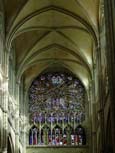 earnings by renting out year-round space for static caravans,
leaving few pitches for visitors; it's an annoying trend, makings stays
noisy and overcrowded. Amiens, setting of Sebastian Faulks' novel
Birdsong, was once the centre of a thriving textile industry. The
city is dominated by the magnificent Gothic Cathedral; built in just 50
years from 1220, it is one of the largest Gothic structures in France
with a remarkable uniformity of style, and a particularly impressive
west façade (Photo 2).
earnings by renting out year-round space for static caravans,
leaving few pitches for visitors; it's an annoying trend, makings stays
noisy and overcrowded. Amiens, setting of Sebastian Faulks' novel
Birdsong, was once the centre of a thriving textile industry. The
city is dominated by the magnificent Gothic Cathedral; built in just 50
years from 1220, it is one of the largest Gothic structures in France
with a remarkable uniformity of style, and a particularly impressive
west façade (Photo 2).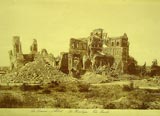 as temporary
positions from which to launch offensives to drive back the invaders.
Added to this, the British high-command anachronistically clung to the
military mind-set of
the mid-19th century, seeing the only solution to
any problem both tactical or strategic as hurling massed infantry
as temporary
positions from which to launch offensives to drive back the invaders.
Added to this, the British high-command anachronistically clung to the
military mind-set of
the mid-19th century, seeing the only solution to
any problem both tactical or strategic as hurling massed infantry against the barbed wire, machine guns and artillery of the German
defences. The town of Albert lay 6 kms back from the front line and was
utterly destroyed by artillery shelling during WW1 (see left). From
across the open Somme landscape, the most prominent feature was the
gilded statue of the Virgin atop the town's Basilica. The statue was hit
by shell-fire in 1915, and the 'Leaning Virgin' prompted the
superstition among the troops that when it finally fell, the war would
end. In the 1920s reconstruction of war damaged towns and villages, the Basilica was rebuilt and the
Golden Virgin again stands out as a landmark over the town (see right).
The very worthwhile Musée des Abris in Albert gives a gruesomely
realistic impression of the appalling conditions which men had to
survive in the trenches.
against the barbed wire, machine guns and artillery of the German
defences. The town of Albert lay 6 kms back from the front line and was
utterly destroyed by artillery shelling during WW1 (see left). From
across the open Somme landscape, the most prominent feature was the
gilded statue of the Virgin atop the town's Basilica. The statue was hit
by shell-fire in 1915, and the 'Leaning Virgin' prompted the
superstition among the troops that when it finally fell, the war would
end. In the 1920s reconstruction of war damaged towns and villages, the Basilica was rebuilt and the
Golden Virgin again stands out as a landmark over the town (see right).
The very worthwhile Musée des Abris in Albert gives a gruesomely
realistic impression of the appalling conditions which men had to
survive in the trenches.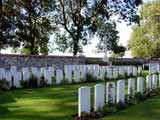 In this area of the Somme,
there are endless war cemeteries, all beautifully maintained by the
Commonwealth War Graves Commission (CWGC). If you want to locate a
relative killed in war, visit the CWGC web
site on
In this area of the Somme,
there are endless war cemeteries, all beautifully maintained by the
Commonwealth War Graves Commission (CWGC). If you want to locate a
relative killed in war, visit the CWGC web
site on  Albert. We found his grave
which stands alongside several of his fellow Northants, all killed on
the
same day trying to take the village. To pay our respects, but unable to
restrain our tears, we planted a rose at his grave (Photo 3), and
recorded an entry in the cemetery visitor book: 'To Private Marriott, 90
years after your death, on behalf of your late wife (my Aunt Lucy), and
of Reginald, the son you never saw'. Our week on the Somme had been
plagued with the same constant rain which in 1916 turned the trenches
and battlefield into a sea of mud. Even so, we have visited so many
cemeteries and memorials, and tearfully walked along row after neat row
of white headstones, most bearing
Albert. We found his grave
which stands alongside several of his fellow Northants, all killed on
the
same day trying to take the village. To pay our respects, but unable to
restrain our tears, we planted a rose at his grave (Photo 3), and
recorded an entry in the cemetery visitor book: 'To Private Marriott, 90
years after your death, on behalf of your late wife (my Aunt Lucy), and
of Reginald, the son you never saw'. Our week on the Somme had been
plagued with the same constant rain which in 1916 turned the trenches
and battlefield into a sea of mud. Even so, we have visited so many
cemeteries and memorials, and tearfully walked along row after neat row
of white headstones, most bearing
 a
regimental badge and a man's name and rank: myriads of young men who died
to protect our freedom, far from families in Britain, France, and
Commonwealth countries - Australia, New Zealand, Canada and
Newfoundland. And saddest of all were those graves simply marked ' A
soldier of the Great War, known unto God'
a
regimental badge and a man's name and rank: myriads of young men who died
to protect our freedom, far from families in Britain, France, and
Commonwealth countries - Australia, New Zealand, Canada and
Newfoundland. And saddest of all were those graves simply marked ' A
soldier of the Great War, known unto God'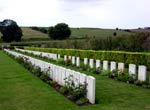 One of our most poignant
visits was to the Newfoundlanders Memorial Park at Beaumont Hamel. The
area has been preserved in its post-battle state to show the topography
of the 1916 battlefield, with
opposing lines of trenches separated by 250 yards of No Man's Land,
still pock-marked with shell holes (Photo 4). On 1 July 1916 at
the start of the Somme offensive, 820 volunteers from the British colony
of Newfoundland went over the top from the British front line trenches,
silhouetted against the skyline, into the murderous hail of machine gun
fire. They made it only 50 yards as far as a surviving tree, and in
half-hour, only 68 of the 820 remained alive. 90 years later, we
followed in their footsteps, climbing out of the British trenches and
walking across No Man's Land as far as the German frontline. Nothing
more unpleasant than driving rain marred our progress, the same rain
which in 1916 had turned this ground into a morass of blood-soaked mud,
and which today further enhanced our empathy with the young men whose
lives were so carelessly sacrificed by incompetent leadership.
One of our most poignant
visits was to the Newfoundlanders Memorial Park at Beaumont Hamel. The
area has been preserved in its post-battle state to show the topography
of the 1916 battlefield, with
opposing lines of trenches separated by 250 yards of No Man's Land,
still pock-marked with shell holes (Photo 4). On 1 July 1916 at
the start of the Somme offensive, 820 volunteers from the British colony
of Newfoundland went over the top from the British front line trenches,
silhouetted against the skyline, into the murderous hail of machine gun
fire. They made it only 50 yards as far as a surviving tree, and in
half-hour, only 68 of the 820 remained alive. 90 years later, we
followed in their footsteps, climbing out of the British trenches and
walking across No Man's Land as far as the German frontline. Nothing
more unpleasant than driving rain marred our progress, the same rain
which in 1916 had turned this ground into a morass of blood-soaked mud,
and which today further enhanced our empathy with the young men whose
lives were so carelessly sacrificed by incompetent leadership. And the final 2 lines
capture so poignantly the unimaginable contrast between the hellish
destruction of 1916 and the peacefulness of the woods today:
And the final 2 lines
capture so poignantly the unimaginable contrast between the hellish
destruction of 1916 and the peacefulness of the woods today: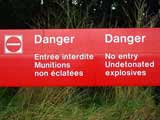 Our final visit was to the
Canadian Memorial Park at Vimy Ridge, scene of some of the most ghastly
trench warfare of WW1: almost 2 years of battle, culminating in the
successful but costly re-capture of the high ground
in April 1917 by Canadian troops. Again the terrain has been preserved
exactly as it was after the conflict, the ground pock-marked with shell
holes, and huge mine craters, and lines of trenches snaking across the
grass. The ground is still littered with the debris of war - unexploded
munitions - and red signs warn of the dangers of straying from the
paths. Canadian students conduct visitors through tunnels cut in the
chalk through which men and materials were ferried up to the front line
to launch the assault. Nearby we were able to experience the feeling of
walking through the preserved trenches (Photo 8), with the
opposing German trenches just yards away across No Man's Land which was
cratered by mine explosions: kitschy yes, but rather better than 9 April
1917!
Our final visit was to the
Canadian Memorial Park at Vimy Ridge, scene of some of the most ghastly
trench warfare of WW1: almost 2 years of battle, culminating in the
successful but costly re-capture of the high ground
in April 1917 by Canadian troops. Again the terrain has been preserved
exactly as it was after the conflict, the ground pock-marked with shell
holes, and huge mine craters, and lines of trenches snaking across the
grass. The ground is still littered with the debris of war - unexploded
munitions - and red signs warn of the dangers of straying from the
paths. Canadian students conduct visitors through tunnels cut in the
chalk through which men and materials were ferried up to the front line
to launch the assault. Nearby we were able to experience the feeling of
walking through the preserved trenches (Photo 8), with the
opposing German trenches just yards away across No Man's Land which was
cratered by mine explosions: kitschy yes, but rather better than 9 April
1917!